
The Business Response to Authoritarian Threats (BRTAT) is a non-partisan convening space and forum that brings together current and former business leaders, business organizations, and companies to create a more coordinated response to democratic backsliding and the ascendancy of political authoritarianism in America. We help the pro-democracy business ecosystem better understand that executive overreach, political instability and authoritarian governance is bad for business.
Right now, the risk of speaking out feels high and the reward feels uncertain to the private sector. The possibility of retaliation and retribution are real. But the economic and reputational costs of staying silent are compounding — in unpredictable regulation, politicized enforcement, government intervention, consumer boycotts and markets distorted by cronyism and corruption. BRTAT exists to educate and engage businesses in defending, and rebuilding trust in our constitutional republic. We know that the increasingly threatening rhetoric, attack on the rule of law and erratic policies should not be normalized.
Authoritarianism doesn’t happen overnight. Establishing an autocracy is a process that includes concentration of executive power, erosion of checks and balances, politicized enforcement of laws, concentration of wealth, marginalization of minority groups, and systematic attacks on the press, judiciary and academia. It means the rules change based on who you know, not what you do. Authoritarianism emerges in political systems controlled by governments on both the left and right.
For business, this translates directly into unpredictable regulation, selective enforcement, politicized contracting, and markets distorted by cronyism. The costs are very real, they’re accruing in real time, and we all pay for them whether we like it or not. The current administration has imposed what amounts to a corruption tax on American enterprise.
Understanding the Threat →The V-Dem Institute's Democracy Report 2026 documents the United States undergoing "the fastest evolving episode of autocratization the USA has been through in modern history."
Across the globe, autocracies now outnumber democracies for the first time in 20 years.
Read the V-Dem Democracy Report 2026 →BRTAT founder Richard Eidlin on why he began convening business leaders to have an adult conversation about authoritarianism and democratic backsliding.
Kathleen Hamill documents how the administration coerced nine major law firms into pledging ~$1B in pro bono work. The most documented case of corporate extraction under the current administration.
Read at LawCrisis.org →Join businesses across the country committing to safe, welcoming environments for World Cup 2026 visitors. Free to sign up — no partisan stance required.
Sign up at WelcomeStandard.org →BRTAT opposes Bill Pulte’s nomination as Acting Director of National Intelligence. He lacks required national security expertise and has demonstrated disregard for institutional integrity.
Read our statement →Join business leaders calling on DHS Secretary Mullen to restore ICE accountability, require judicial warrants, and ensure constitutional rights are respected.
Read & sign the letter →BRTAT organizes its work through four working groups, each focused on a specific way authoritarian governance threatens business. These groups bring together business leaders, researchers, and partner organizations to develop campaigns, calls to action, and practical resources.
When government plays favorites, honest businesses pay the price. We document the corruption tax and build the business case against cronyism.
Learn more →Free and fair elections are the foundation of market confidence. We mobilize business voices to protect electoral infrastructure.
Learn more →When ICE raids empty Main Street, businesses lose customers, workers, and revenue. We document the economic toll.
Learn more →From erratic tariffs to a captured economy, we tackle the policies that hold businesses back and develop a forward-looking agenda for shared prosperity.
Learn more →"It is exceedingly difficult for business to thrive where rule of law is absent, where governments are not transparent or accountable, and where citizens do not have the ability to exercise their fundamental civil and political rights."
— BSR (Business for Social Responsibility), Democracy and Human Rights
Why democratic backsliding is not just a political problem — it is an economic one.
Authoritarianism doesn’t happen overnight. Establishing an autocracy is a process that includes concentration of executive power, erosion of checks and balances, politicized enforcement of laws, concentration of wealth, marginalization of minority groups, and systematic attacks on the press, judiciary and academia. It means the rules change based on who you know, not what you do. Authoritarianism emerges in political systems controlled by governments on both the left and right.
For business, this translates directly into unpredictable regulation, selective enforcement, politicized contracting, and markets distorted by cronyism. The costs are very real, they’re accruing in real time, and we all pay for them whether we like it or not. The current administration has imposed what amounts to a corruption tax on American enterprise.
The V-Dem Institute’s Democracy Report 2026 documents the United States undergoing “the fastest evolving episode of autocratization the USA has been through in modern history.”
Across the globe, autocracies now outnumber democracies for the first time in 20 years.
Read the V-Dem Democracy Report 2026 →— Abraham Lincoln, Lyceum Address (1838)
— Steven Levitsky, How Democracies Die
Political scientist Steven Levitsky calls what the United States is experiencing “competitive authoritarianism” — a system where elections still happen and institutions still exist, but those in power systematically tilt the playing field in their favor.
It looks like:
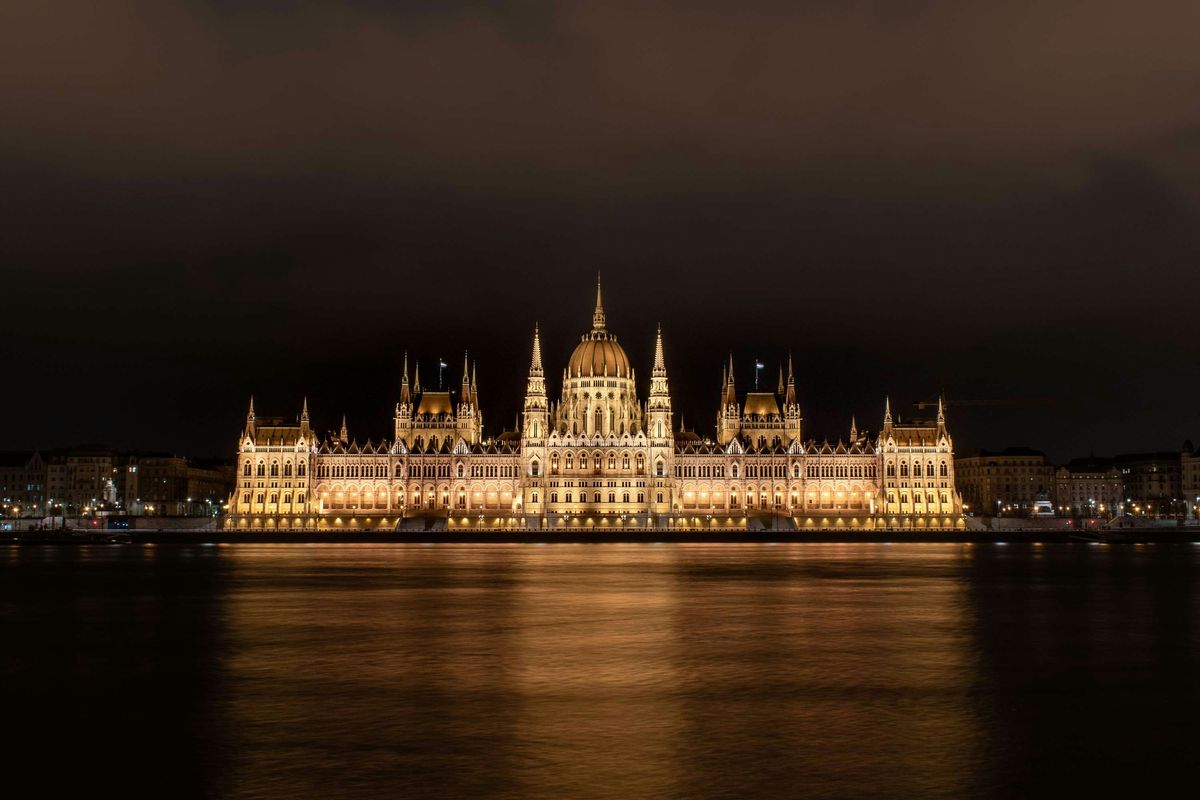
Under Viktor Orbán, the country became the governance model that Heritage Foundation President Kevin Roberts called “not just a model for conservative statecraft, but the model.” The results: inflation that hit 17.5%, a currency that lost 30% of its value, the worst EU corruption scores for four consecutive years, over 500,000 citizens emigrating, and an economy that fell behind neighbors Poland and the Czech Republic — countries that faced the same energy crisis and EU constraints but chose different governance.
In April 2026, Hungarian voters ended Fidesz’s 16-year supermajority, handing the opposition Tisza party 141 of 199 parliamentary seats. The economic damage, however, will take years to reverse.

Authoritarianism is bad for business. The evidence is clear across six dimensions:
Authoritarian governance degrades economic performance, chills the investment climate, undermines business planning, reverses social progress, and distorts the competitive market. When regulation depends on political loyalty rather than clear rules, businesses cannot plan, invest, or compete on merit. Behind closed doors, America’s CEOs say this is bad for business.
Open exchange of ideas — including those out of sync with the preferred narrative of political leadership — is being suppressed. When businesses fear speaking out, innovation suffers, accountability disappears, and the marketplace of ideas that drives American competitiveness contracts.
A free press is not just a constitutional right — it is infrastructure that markets depend on. Reliable information drives investment decisions, consumer confidence, and accountability. When media is threatened or co-opted, the information environment degrades and business decisions suffer.
The constitutional system of checks and balances exists to prevent any single branch from wielding unchecked power. When the legislative and judicial branches are unable to operate independently of the executive, the regulatory environment becomes unpredictable and businesses lose their recourse.
Respect for an independent judicial system and equal treatment under the law are the bedrock of the business environment. When enforcement is selective — targeting critics while rewarding allies — every contract, every permit, and every regulatory interaction becomes contingent on political favor rather than legal right.
Democratic backsliding damages the United States’ reputation in the global economy. International partners, investors, and trading partners depend on American reliability. When that reliability is in question, the cost of doing business rises for every American company operating abroad. The V-Dem Institute reports the U.S. has fallen from 20th to 51st in its Liberal Democracy Index in just one year.
The business community has a unique voice and unique leverage. BRTAT exists to help you use both — safely, collectively, and effectively.
BRTAT organizes its activities through four working groups, each focused on a specific way authoritarian governance threatens business prosperity. These groups bring together business leaders, researchers, and partner organizations to develop campaigns, calls to action, and practical resources.
Self-dealing, coerced donations, pay-to-play contracting, and selective enforcement are creating a corruption tax on American business. This working group documents the economic costs and builds the business case against crony capitalism.
Learn more →A fair and free election system is essential for business stability. The administration and some state legislatures are undermining confidence in elections. This working group mobilizes business voices to protect the democratic process.
Learn more →The deployment of military and federal agents in communities disrupts commerce, empties Main Streets, and creates a chilling effect on the workforce. This working group shares strategies for protecting businesses and employees.
Learn more →How do we recover from a captured economy? This working group tackles erratic tariffs, documents the damage, and develops a forward-looking economic agenda built on fair competition, strategic investment, and shared prosperity.
Learn more →Working groups are open to all partners. Participation is confidential under Chatham House rules unless you choose to engage publicly.
Join a Working GroupIdentifying, documenting, and communicating the direct economic harms to American businesses that government corruption and crony capitalism cause.
The BRTAT Cronyism & Corruption Steering Committee is committed to identifying, documenting, and communicating the direct economic harms to American businesses that government corruption and crony capitalism cause, including pay-to-play arrangements, selective enforcement, conflicts of interest, shakedowns and rent extraction, and the gutting of independent oversight.
These practices distort free markets, raise the cost of doing business, and undermine the rule of law that every commercial transaction depends upon. The Steering Committee equips executives, boards, chambers of commerce, and industry associations to recognize and respond to corruption as the fundamental market failure that it is.
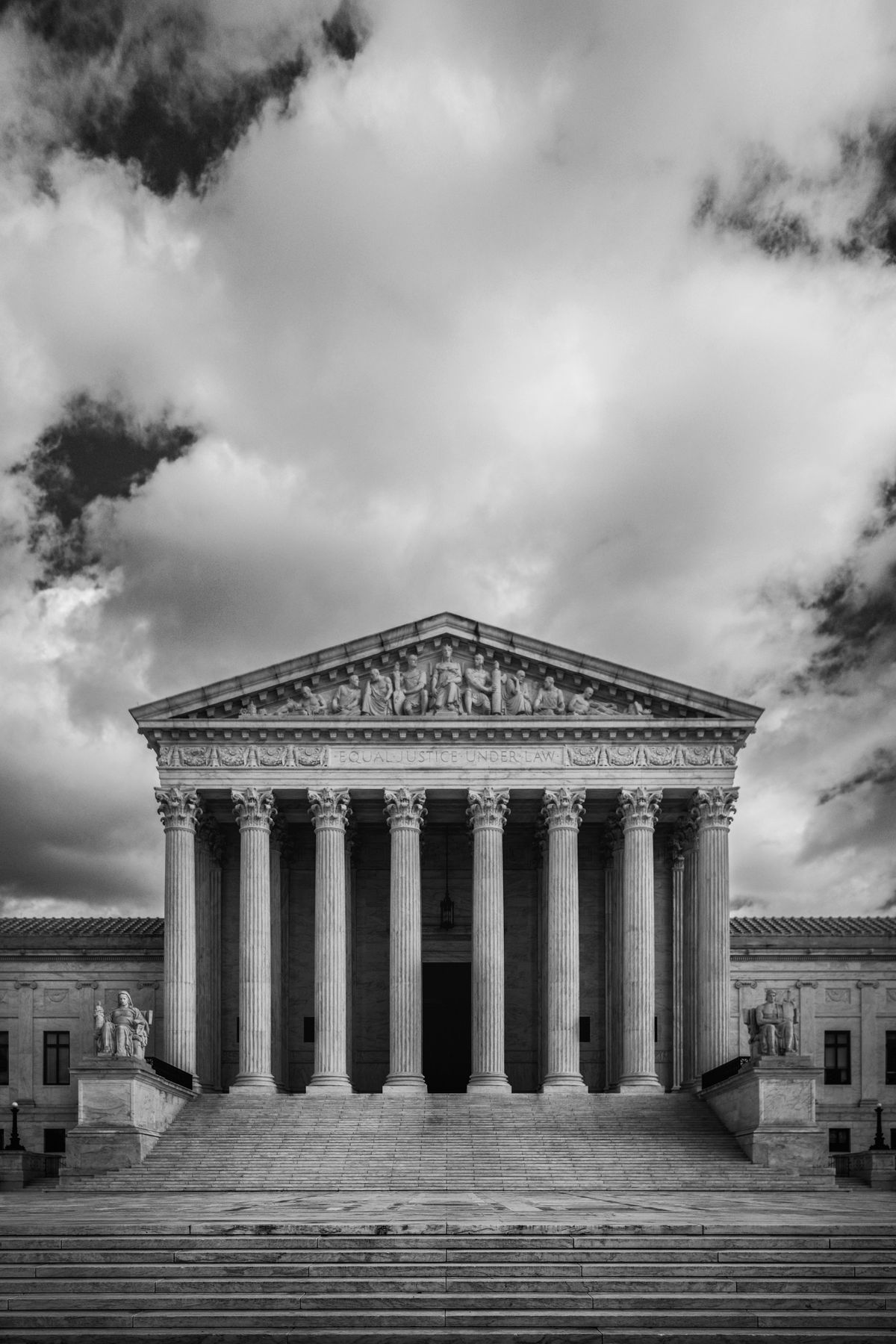
— President Ronald Reagan
A business doesn’t have to be a target of corruption to be a victim of it. Corruption raises costs, distorts markets, and creates competitors who don’t play by the same rules.
The business case against authoritarian corruption is fundamentally economic. The Rule of Law — a system under which all people, institutions, and entities are held equally accountable — is critical for business because it creates a stable environment in which companies are more likely to invest, innovate, and thrive. When that foundation erodes, so does business confidence.
Business audiences already understand political risk abroad. They evaluate it for every emerging market investment. This working group's job is getting them to apply the same analytical rigor to their home market — because the same dynamics are now present.
The working group has documented corruption under six categories, each with sourced evidence and documented dollar figures:
~$700M+ in documented direct-to-family financial flows through meme coins, lawsuit settlements, a documentary deal, the inaugural fund, and the White House ballroom project.
$2B in retail losses vs. $300M+ in administration-linked gains from presidential meme coins. Those in power shape the regulatory environment their own ventures compete in.
$239M inaugural fund, $300M White House ballroom, $1.94B in law firm coercion. New sponsorship categories creating an unlegislated cost of federal business.
Nine major law firms coerced into pledging ~$1B in pro bono work to administration-favored causes under threat of executive orders and EEOC investigations. Documented in the Law Firm Crisis report by Kathleen Hamill.
271K federal jobs cut. DOGE contracts terminated — 60.22% were small business contracts. EPA cut 23%, CFPB shut down, Education OCR cut 74%. The watchdogs are gone.
Liberation Day tariffs caused $10T in global market losses. A "great time to buy" statement followed by a 90-day pause generated $415M in personal gains. Eight officials flagged for suspicious stock sales.
Ready to join the conversation? The Cronyism & Corruption Working Group meets regularly under Chatham House rules.
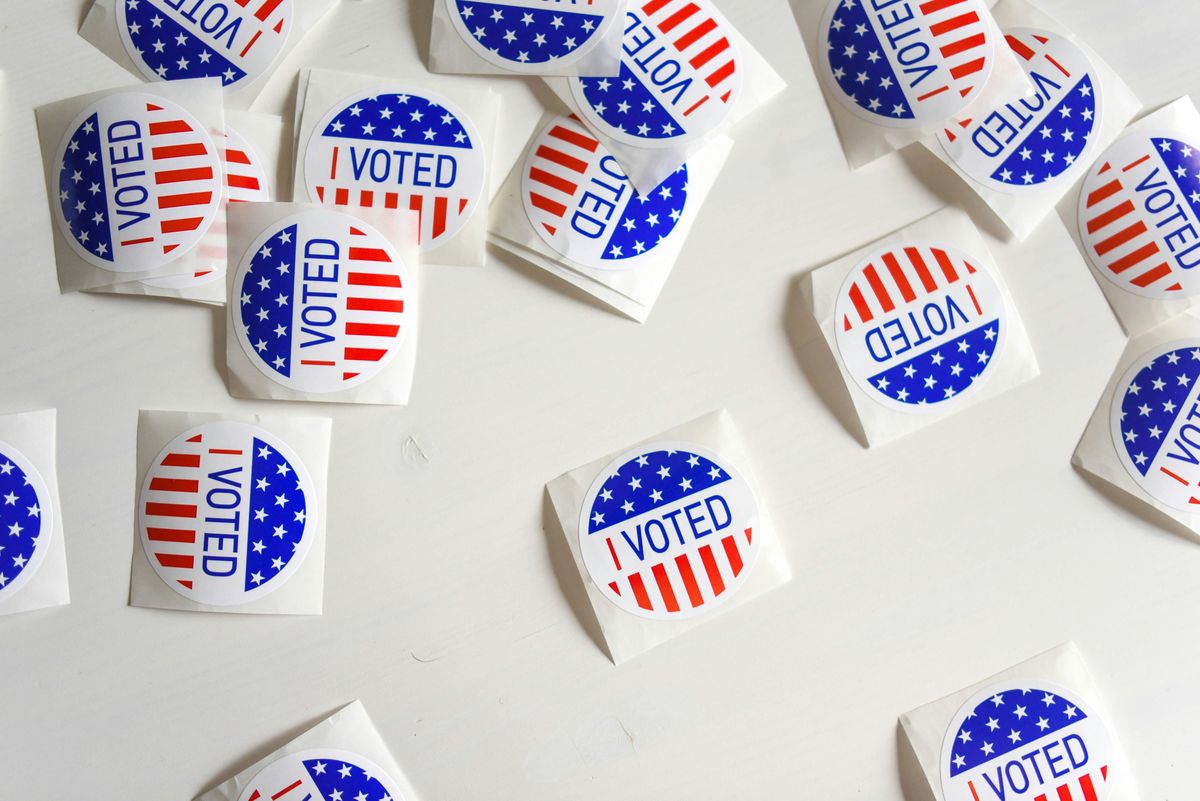
Join This Working Group View All Working GroupsA fair and free election is essential to forestalling further democratic backsliding. The administration, aided in some cases by state legislatures, seems intent on undermining the election system as well as shaking the public's confidence in the efficacy, rules, and fairness of the process.
Market confidence depends on political stability. When elections are contested, uncertain, or perceived as unfair, the resulting instability increases the cost of capital, disrupts investment planning, and creates regulatory uncertainty that lasts years beyond any single election cycle.
Businesses can play a critical role in encouraging their employees to vote, legitimizing the integrity of the election system, and speaking out against federal interference in how elections are run at the state level.
The administration has taken specific actions that seek to undermine confidence in the election system, challenge the legitimacy of election officials, change voting rules — particularly around vote by mail — and tilt the playing field. These include efforts to challenge state election laws, restrict voter access, and undermine public trust in the electoral process itself.
Ready to join the conversation? The Election Integrity Working Group meets regularly under Chatham House rules.
Join This Working Group View All Working GroupsWhen ICE descends on Main Street
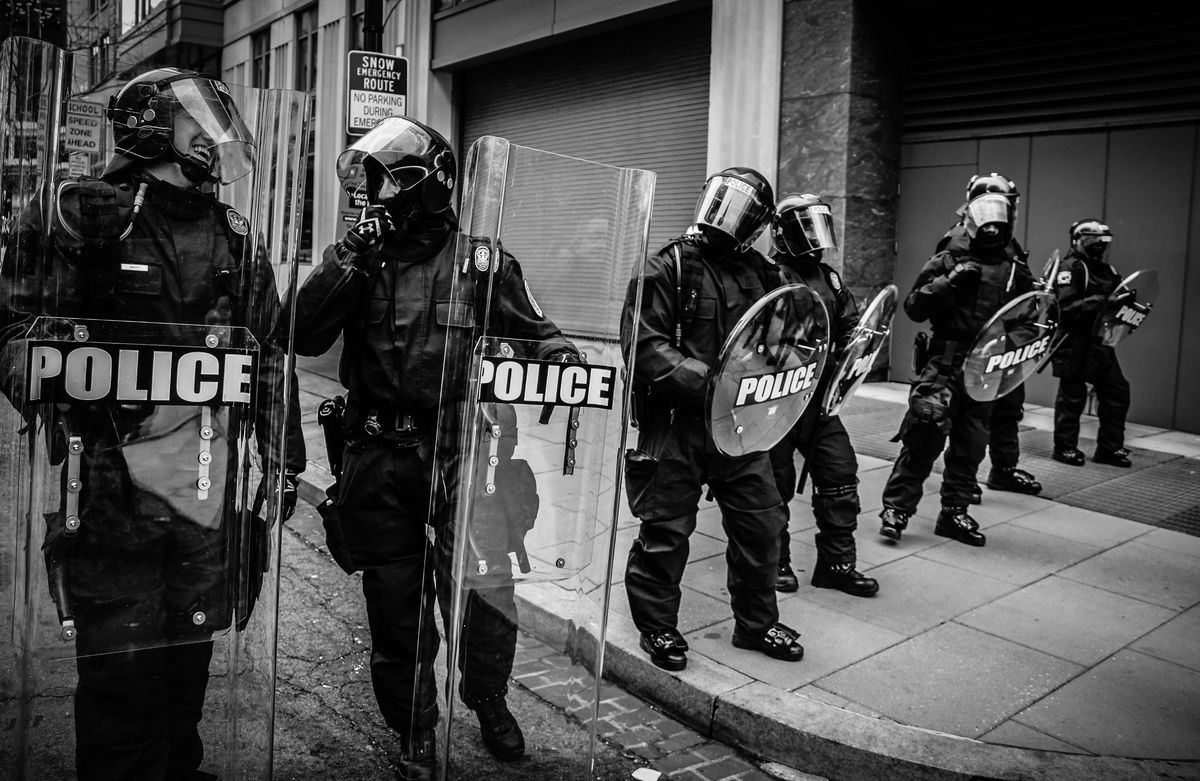
The deployment of National Guard troops and ICE agents disrupts commerce, threatens the rule of law, and chills economic activity in communities across the country. Warrantless arrests, violent enforcement tactics, and the possible invocation of the Insurrection Act are grave concerns for the private sector.
When federal agents conduct raids in business districts, the economic impact is immediate and measurable. Customers stay home. Workers fear coming to work. Supply chains are disrupted. The chilling effect extends far beyond any individual enforcement action — entire communities pull back from economic activity.
This working group shares strategies for how businesses are responding and provides insight on how to protect your workforce and your community.
You are not required to allow agents into non-public areas without a judicial warrant signed by a judge. An administrative warrant (Form I-200) does not grant the right to enter. Ask to see the warrant and verify it is signed by a judge.
You are not required to provide employee records, I-9 forms, or personnel files without a valid subpoena or judicial warrant. Document any interactions with federal agents.
If your business or employees are facing enforcement actions, free legal resources are available through the Democracy 2025 network (650+ organizations) and state-level advocacy groups.
Ready to join the conversation? The Militarization of Communities Working Group meets regularly under Chatham House rules.
Join This Working Group View All Working GroupsThe American economy has been captured. Erratic tariffs, crony deal-making, and executive overreach have replaced the predictable, rules-based system that businesses depend on. This working group asks the questions that matter most right now: How do we recover from a captured economy? How do we stimulate growth in a way that is sustainable and broadly shared? What does an economy that works for everybody look like in 2026 and beyond?
The Constitution grants trade authority to Congress, not the executive branch. Unilateral tariff imposition fits the authoritarian pattern of aggrandizing executive power at the expense of democratic institutions.
For businesses, the damage is not just the tariffs themselves. It is the unpredictability. When tariff policy shifts overnight based on a social media post, businesses cannot plan, cannot invest, and cannot compete. The cost falls hardest on small businesses that lack the resources to absorb sudden cost increases or lobby for exemptions.

Tariffs are a symptom. The deeper problem is an economy increasingly shaped by who you know rather than what you build. When political connections determine market access, government contracts flow to loyalists, and wealth concentrates at the top, the competitive engine that drives American prosperity stalls. This working group is developing a forward-looking economic agenda grounded in shared prosperity and open competition:
Real stories from real businesses are the most powerful tool for driving Congressional action. Here is how tariffs are affecting businesses across the country:
Ready to join the conversation? The Economic Policy & Tariffs Working Group meets regularly under Chatham House rules.
Join This Working Group View All Working GroupsEvery action matters. Sign a letter, share your story, attend an event, or join a working group. Updated regularly with the latest opportunities from BRTAT and our partner organizations.
Join businesses across the country committing to safe, welcoming environments for World Cup 2026 visitors. Free to sign up — no partisan stance required. A practical first step any business can take.
Sign Up at WelcomeStandard.org →Call on the new DHS Secretary to restore ICE’s credibility by requiring judicial warrants, prohibiting pretextual stops, mandating agent identification, and ensuring transparent investigations of lethal force incidents.
Read & Sign the Letter →Your story is a powerful tool for change. Submit a short account of how erratic tariff policy is affecting your business, employees, and community. We compile stories and deliver them to Congressional offices.
Share Your Tariff Story →Self-dealing and selective regulatory enforcement undermine the free market. Add your name to the growing list of business leaders demanding oversight.
Sign the Letter →A fair and free election system is essential for business stability. Join the nonpartisan business coalition defending election integrity ahead of 2026.
Add Your Name →Civil and constitutional rights are essential to strong communities and a strong economy. Business leaders called for the restoration of the Rule of Law and accountability for civil rights violations in Minnesota.
View the Letter →Working groups meet regularly to develop strategy, share resources, and coordinate action. Current as well as former business leaders are welcome.
Tracking conflicts of interest, demanding congressional oversight, and defending the level playing field.
Protecting fair elections, voter access, and the democratic process through business engagement.
Responding to enforcement overreach, protecting workforces, and defending due process.
Urging Congress to reassert trade authority and amplifying small business impact stories.
Curated resources from BRTAT and our partner organizations to help you understand and respond to rising authoritarianism.
Common questions from business leaders considering engagement with BRTAT. If you have a question not answered here, reach out directly.
BRTAT (Business Response to Authoritarian Threats) is a nonpartisan convening space that brings together business leaders, business organizations, and companies to create a more coordinated response to democratic backsliding in America. We are a 501(c)(3) organization, fiscally sponsored by Independence Initiative, Inc.
Think of us as the connective tissue of the pro-democracy business ecosystem — we do not compete with existing organizations. We connect them, coordinate their work, and translate shared concerns into collective action.
BRTAT organizes its work through four working groups focused on the specific ways authoritarian governance threatens business: Cronyism & Corruption, Election Integrity, Militarization of Communities, and Economic Policy & Tariffs.
Each working group meets regularly under Chatham House rules to develop original analysis, create campaigns and calls to action, produce practical resources, and coordinate collective responses. We also host monthly all-hands convenings featuring national experts — recent speakers have included former Ambassador Norm Eisen and Stanford professor Larry Diamond.
That depends entirely on your comfort level. Participation is a spectrum:
Listen and learn: Attend a working group or all-hands meeting. Chatham House rules protect your privacy. You are under no obligation to do anything else.
Contribute expertise: Share your industry perspective in working group discussions. Your knowledge helps us produce better analysis and more effective resources.
Sign on: Add your name to a sign-on letter on an issue that matters to your business. Letters to Congress carry more weight with more signers.
Go public: If and when you are ready, lend your name and credibility to the coalition publicly. This is entirely opt-in and never required.
No. BRTAT is cross-partisan by design. Our coalition includes business leaders who vote Republican, Democrat, Independent, and Libertarian — united by the recognition that functioning democratic institutions, rule of law, and predictable governance are prerequisites for a healthy economy.
Participation does not require adherence to any ideology or party. It requires only the conviction that authoritarianism is bad for business and bad for America. Defending the operating environment for free enterprise is not a partisan position — it is the most fundamental pro-business position there is.
This is the core question, and it is a legitimate concern. The risk of speaking up individually is real — but the risk of staying silent collectively is greater.
BRTAT exists to change the cost-benefit calculation through collective action. When businesses rise together, the retaliation risk for any individual company drops dramatically. There is safety in numbers — and that safety is precisely what we are building.
In the meantime, BRTAT provides a confidential space to engage. Working groups operate under Chatham House rules. You choose your level of public visibility. Many of our most active participants are not publicly associated with BRTAT at all.
Protecting the rule of law and the operating environment for business is not partisan political engagement. It is the same kind of governance-risk management that companies already do when evaluating overseas markets.
BRTAT is a 501(c)(3) educational organization. Our working groups produce research, analysis, and resources. Participating in BRTAT is no different from participating in a chamber of commerce, a trade association, or a business roundtable — all of which engage with governance issues as a matter of course.
Absolutely. In many ways, small businesses are BRTAT's most powerful voice.
In Maine, 21 businesses signed a letter to their Congressional delegation about ICE accountability. In Colorado, 88 business and civic leaders signed a letter on election integrity. These were not Fortune 500 companies — they were local businesses whose credibility came from their roots in their communities.
Small businesses collectively employ nearly half the American workforce. When small business owners speak, elected officials listen — because small business owners are their constituents, their donors, and their neighbors.
Many excellent organizations are doing important work: ASBN coordinates sign-on letters, Leadership Now convenes executives, BFA runs civic engagement programs, Protect Democracy litigates. BRTAT does not compete with any of them.
BRTAT is the integrator. Nobody else connects the dots across all four issue areas — cronyism, elections, militarization, and tariffs — and translates them into coordinated business action. We are the convening space where all of these organizations and their constituencies come together to build something larger than any one group can build alone.
Only if you want it to be. BRTAT operates a tiered visibility model:
Private: Working group meetings are under Chatham House rules. Participants can share what was discussed, but not who said it. Your participation is known to BRTAT but not publicly listed.
Semi-public: Sign-on letters may list your name and company, but only with your explicit consent for each letter.
Public: Some partners choose to be publicly associated with BRTAT as validators. This is entirely opt-in and only activated when you choose.
BRTAT is a 501(c)(3) organization operating under fiscal sponsorship from Independence Initiative, Inc. We are funded primarily through tax-deductible individual donations.
Working group participation is free. We do not charge membership dues or fees. Our funding model is designed to ensure that BRTAT remains independent, accountable to its mission, and free from corporate capture.
Former U.S. Ambassador to the Czech Republic, Brookings senior fellow, and co-publisher of The Contrarian with Jen Rubin.
Ambassador Norm Eisen joined BRTAT's April All-Hands Convening to discuss the current landscape of democratic backsliding, the role of legal and institutional resistance, and what the business community can do to defend the rule of law. Eisen is a former U.S. Ambassador to the Czech Republic (2011–2014), senior fellow at the Brookings Institution, and co-publisher of The Contrarian on Substack with Jen Rubin.
Join us and our partners for convenings, webinars, and informational sessions. Updated regularly.
Jed Emerson, founder of Blended Value Group and former faculty at Harvard, Stanford, and Oxford, explores how authoritarianism undermines the systemic frameworks on which modern capital markets depend.
Register for Event →How companies are reaching internal and external audiences with nonpartisan civic engagement. Featuring leaders from Civic Holidays, the Center for U.S. Voters Abroad Foundation, IKEA, and Blue Cross Blue Shield of Minnesota.
Register for Webinar →Government corruption has always been a drag on business. But the scale and speed of what’s happening now is different.
Register for Webinar →How growing corruption and threats to democracy affect the business sector. Featuring Professor Larry Diamond (Stanford/Hoover Institution), Richard Eidlin (BRTAT), Daniel Post-Jacobs (B Local Bay Area), and Amelia Ahl (BABD).
Register for Webinar →June 10th (4:00pm ET) — A Conversation with Impact Investor Jed Emerson
Presented by BRTAT – The Business Response to Authoritarian Threats
For decades, institutional investors have treated authoritarianism mainly as a political or ethical issue—managed by governance committees, exclusion lists, or country-risk experts—not as a primary consideration in portfolio construction.
That approach is no longer defensible.
Authoritarianism today functions less as a discrete regime type and more as a systemic institutional condition: the steady erosion of institutional checks on power, weakening of the rule of law, and degradation of information integrity. When these conditions take hold, as they are in the United States, they undermine the systemic frameworks on which modern capital markets depend. Performance of individual stocks and portfolio’s become increasingly influenced by proximity to power and whether the firm is in the good graces of political leaders. Jed has written a series of Substack posts about the risks posed to investors (large and small) by authoritarian political systems.
Our session will be a reflection on the drift toward authoritarianism in the US and abroad, exploring ideas regarding how authoritarianism—despite a short term run up in the stock market!—is bad for business and investors. We’ll review key concepts from Jed’s writings on the topic of authoritarianism as investor risk and then discuss the need for business and community leaders to raise our voice in opposition to executive overreach. An active discussion will follow, including how to slow democratic backsliding.
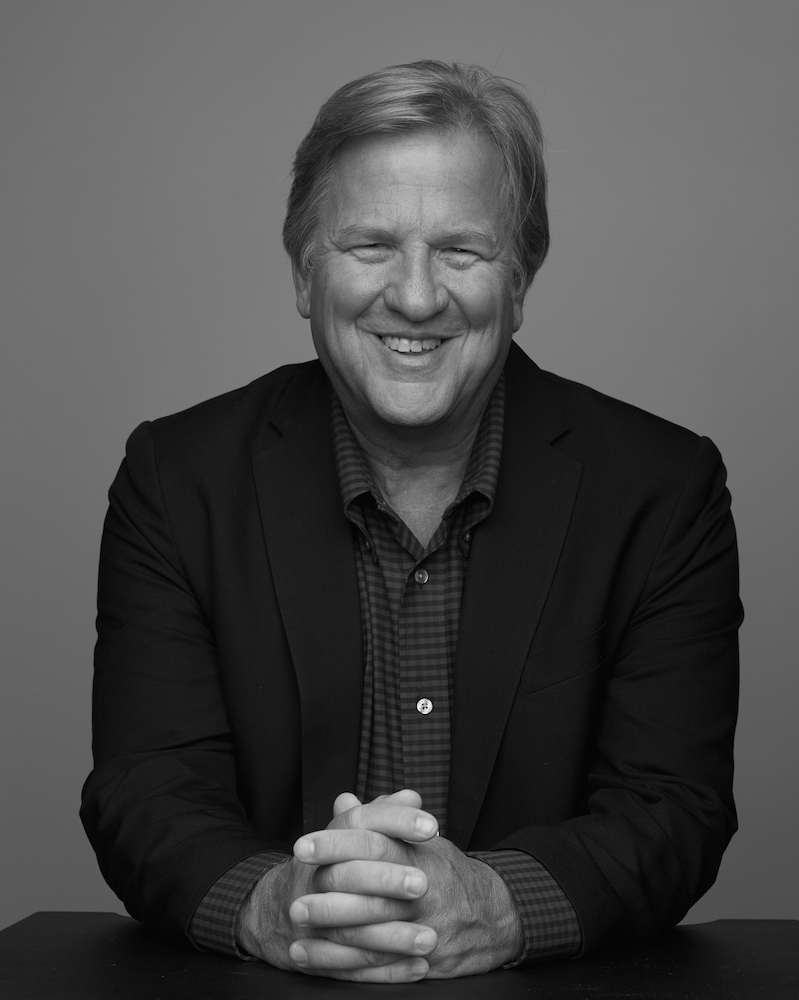
Jed is founder of Blended Value Group, a consulting and advisory firm working with investment firms, funds, family offices and foundations to advance more effective wealth management and impact investing strategy and practice.
Emerson is a Senior Fellow with the Blended Finance Initiative at the University of Zurich, a Senior Research Fellow at University of Heidelberg’s Center on Social Investing in Germany and has held faculty appointments at Harvard, Stanford and Oxford business schools. He has taught social entrepreneurship at Kellogg Business School, Harvard Business School, and NYU-Abu Dhabi.
In the late 90s, Emerson coined the concept of Blended Value to describe the reality that the value we create in our lives and through our investing is a blend of social, environmental and economic elements. While the value we create is whole, society asks us to choose between doing well or doing good, making money or engaging in philanthropy and working in nonprofit or for-profit organizations. Emerson’s last book, The Purpose of Capital: Elements of Impact, Financial Flows, and Natural Being, explores how we may bridge the divide between how we think about doing well and doing good.
A Zoom link will be sent to your email before the event. Fields marked with * are required.
BRTAT brings together over 200 business leaders across four working groups to respond to threats to democratic governance. We welcome media inquiries and are available to provide commentary, expert sources, and background on the business case for democracy.
For press inquiries, interview requests, or media partnership opportunities, contact:
Email: press@brtat.org
BRTAT (Business Response to Authoritarian Threats) is a nonpartisan 501(c)(3) coalition that convenes business leaders, business organizations, and companies to create a more coordinated response to democratic backsliding and the ascendancy of political authoritarianism in America. Founded in 2025 and operating under fiscal sponsorship from Independence Initiative, Inc., BRTAT organizes its work through four working groups focused on Cronyism & Corruption, Election Integrity, Militarization of Communities, and Economic Policy & Tariffs. Over 200 business leaders participate in BRTAT's working groups and convenings. BRTAT is part of the Horizons Project's Pillars of Support business pillar, in partnership with the SNF Agora Institute at Johns Hopkins University.
BRTAT Opposes Bill Pulte as Acting Director of National Intelligence — June 2, 2026. BRTAT opposes the nomination on grounds of lacking required national security expertise and demonstrated disregard for institutional integrity.
For media inquiries, contact us at press@brtat.org. For partner organization publications and analysis, see our Resources page.
A cross-partisan business coalition united by one conviction: authoritarianism is bad for business and bad for America.
BRTAT (Business Response to Authoritarian Threats) provides a forum for business leaders, business organizations, and companies to have a frank conversation about the risks of democratic backsliding and the ascendency of political authoritarianism in America. We understand that continued capitulation and silence by businesses around executive overreach allows for crony capitalism, degrades constitutional rights, weakens our federalist system, increases societal polarization and undermines the rule of law and due process. BRTAT encourages a systemic critique about the threats before us. Our analysis is rooted in history, data and informed by comparative analysis of how autocracies rise and fall across the globe.
BRTAT is not intended to compete with existing organizations. Rather it convenes companies and business organizations concerned about the health of our constitutional republic to learn from each other, hear from experts, and consider collective action campaigns. We are the glue, the convener, the integrator of the existing pieces of the pro-democracy business ecosystem. Nobody else connects the dots across cronyism, elections, militarization, and trade policy — and translates them into coordinated business action.
We appreciate the many important projects already underway by pro-democracy business groups and recognize that no one single strategy will ‘save’ our democracy. We help to amplify existing projects, while initiating new ones where a gap exists. BRTAT also facilitates relationship building with civil society (veterans, faith, labor) organizations.
BRTAT supports a positive, future-looking vision for America. A future in which the Bill of Rights and constitutional principles are respected, the separation of powers remains vital, government does not operate based on personal gain, science is respected, and a dynamic free market and sustainable economy is maintained. A country which returns to more traditional American values and style of political leadership.
Richard Eidlin explains why he began convening business leaders in 2025 to address democratic backsliding — and what makes the current moment so urgent for the private sector.
BRTAT is cross-partisan by design. Our coalition includes business leaders who vote Republican, Democrat, Independent, and Libertarian — united by the recognition that functioning democratic institutions, rule of law, and predictable governance are prerequisites for a healthy economy.
Participation does not require adherence to any ideology or party. It requires only the conviction that authoritarianism is bad for business and bad for America. When businesses speak with one voice in defense of democratic governance, it gives leaders across the political spectrum permission to act.

Inveterate advocate for corporate social responsibility, former business owner, and long-time policy champion for sustainable business. Founded BRTAT in the summer of 2025.

Strategic communications professional. Executive Director of Fortify Democracy, BRTAT's 501(c)(4) partner organization.
BRTAT's Steering Committee brings together experienced leaders from business, policy, and civil society who share a commitment to defending democratic institutions and the rule of law.

Senior Fellow at the Institute of International Studies at UC Berkeley and Associate Fellow at Chatham House. Over a four-decade career, Freeman has worked at the intersection of governments, corporations, and civil society to establish global standards for corporate responsibility. Former U.S. Deputy Assistant Secretary of State for Democracy, Human Rights and Labor; former VP for Sustainability Research and Policy at Calvert Investments.

Executive Director of ClimateVoice, a nonprofit advocating for corporate political responsibility and working to leverage the power of corporate influence to win crucial policy battles. She has worked for social change and environmental protection-focused nonprofits for over 20 years.

Cofounder and President of the American Sustainable Business Network, a coalition representing over 250,000 businesses committed to building a sustainable, just, and regenerative economy. Also co-founded the American Sustainable Business Council in 2008. A longtime advocate for business-led civic engagement and democratic resilience.

Retired healthcare executive with a career spanning technology transfer, medical devices, and biotechnology. She previously held leadership roles at Alkermes, Boston Consulting Group, Morgan Stanley, and Brigham and Women's Hospital. Founding member of The Council for American Democracy and a supporter of Issue One.

Founder and Chief Network Weaver of The Horizons Project, which works at the intersection of peacebuilding, social justice, and democracy in the United States. Previously served nearly 14 years as President and CEO of PartnersGlobal. Currently Chair of the Board of the Alliance for Peacebuilding. Brings more than 30 years of experience convening cross-sector coalitions for democratic change and conflict transformation in over 30 countries.

Co-Founder and Co-Director of Democracy Rising Collaborative. Former Communications Advisor to the bi-partisan American Bar Association’s Task Force for American Democracy. A member of the New York Bar and graduate of Pritzker Northwestern University School of Law. Advisor to the senior leadership of the American Bar Association and the Bolch Judicial Institute of Duke Law School. Former chief speechwriter for Governor Andrew Cuomo and senior White House adviser to President Bill Clinton. Has advised Judge Thomas Griffith (ret.), Mike Bloomberg, and Ajay Banga (now President of the World Bank).
BRTAT is a coalition of partners, not a membership organization. There are multiple ways to engage:
Current or former executives, owners, and professionals who want to engage with peers on democratic governance issues. Join working groups, attend convenings, sign letters, or simply listen and learn.
Companies of any size that recognize the connection between democratic stability and business success. Participation ranges from private working group engagement to public coalition endorsement.
Chambers of commerce, industry associations, and business networks that want to connect their members to the broader pro-democracy business movement. One endorsement cascades to thousands.
Researchers, institutes, and academic programs focused on democratic governance, political risk, corporate responsibility, or business and society. Contribute analysis and benefit from practitioner insight.
Horizons Project: BRTAT is part of the Horizons Project's Pillars of Support business organizing work, in partnership with the SNF Agora Institute at Johns Hopkins University.
Independence Initiative, Inc.: BRTAT operates as a 501(c)(3) under fiscal sponsorship from Independence Initiative, Inc. (Washington, DC).
Fortify Democracy: BRTAT's 501(c)(4) partner organization, focused on electoral reform advocacy and issue advocacy that falls outside BRTAT's educational mission.
Ready to join the coalition? Whether you want to listen, learn, or lead — there is a place for you.
Get InvolvedWhether you want to join a working group, sign a letter, or simply learn more, fill out the form below and we will be in touch. All inquiries are confidential.
If you are among the many business leaders concerned about the health of our country, and what the future holds for your company's ability to prosper, and our society and your children, please engage. Whether you want to partner with other businesses in collective action, join a working group, sign a letter, or simply learn more, fill out the form below and we will be in touch. All inquiries are confidential.
All businesses — large and small, public or private — are welcome. Trade groups, business associations, business think tanks, and academics specializing in business policy and political economy are also encouraged to participate.
How the Administration Is Attacking American Business
Published April 23, 2026
This document is designed for CEOs, CFOs, general counsels, and board members evaluating political risk under the current administration.
The current administration has built a system in which federal policy serves as a revenue mechanism for the president's family and a coercion tool against businesses that do not comply. The result is a de facto "corruption tax" on American enterprise: incremental, non-market costs and risks that firms must absorb to remain competitive. These costs take several forms — direct tribute payments (donations, settlements, project funding), regulatory disadvantage (lost exemptions, delayed approvals for non-participants), a market volatility premium (higher cost of capital due to politicized, unpredictable decisions), and opportunity costs (projects shelved or delayed given uncertainty). This is an analytic frame, not a legally defined tax, but the costs to businesses are real and documented.
The evidence below spans six categories, drawn entirely from mainstream investigative reporting, federal disclosures, and court filings.
Personal Enrichment: The Trump family has received more than $700 million through meme coins, crypto ventures, lawsuit settlements, and a documentary deal funded by companies with active regulatory business before the administration.
Crypto Conflicts: The president owns crypto platforms while his appointees set crypto regulation. Retail investors lost $2 billion on the $TRUMP coin alone. Shortly after the coin's largest buyer invested $93 million in Trump ventures, the SEC paused its fraud case against him.
Pay-to-Play: A record $239 million inaugural fund and a $300 million White House ballroom project function as new tribute channels. Every major donor had pending regulatory business.
The Trump Squeeze: Law firms that once represented Trump opponents were targeted by executive order. Fifteen firms capitulated. Total extracted commitments: approximately $1.94 billion in pro bono legal services directed to administration-approved causes (compiled from law firm statements and documented in the Law Firm Crisis report by Kathleen Hamill).
Gutting Oversight: DOGE eliminated 271,000 federal jobs while spending actually increased. The head of DOGE held conflicts of interest at over 70% of agencies targeted for cuts, and his companies held $38 billion in government contracts and subsidies.
Market Manipulation: "Liberation Day" tariffs destroyed $10 trillion in global equity value. Hours after posting "THIS IS A GREAT TIME TO BUY!!!" the president announced a tariff pause. His personal stake gained $415 million that day. ProPublica documented officials selling stock within days of tariff announcements they helped shape.
Aggregate documented cost: tens of trillions in market value destroyed, $2+ billion in direct retail investor losses on presidential crypto products, $1.94 billion extracted from law firms, $700+ million in personal enrichment, 271,000 federal jobs eliminated, 26,000+ small business contracts terminated.
Note: These figures represent category-specific costs and are not simply additive. Market value destruction reflects temporary equity losses across global markets; direct cash flows (enrichment, extraction, investor losses) are distinct measures. Each category below documents its figures independently with linked sources.
Direct financial flows from the exercise of public office to the president's family: meme coins, crypto ventures, lawsuit settlements against media companies, a First Lady documentary, and a $300 million presidential construction project funded by regulated corporations.
Three days before inauguration, on January 17, 2025, Trump launched the $TRUMP meme coin. Trump-affiliated entities CIC Digital and Fight Fight Fight LLC owned approximately 80% of the token supply, collecting trading fees on every transaction. The coin hit a peak market cap of $14.75 billion on January 19, then crashed 85-90% within weeks.
The Trump family generated approximately $86-100 million in trading fees in the first two weeks alone. Through 2025, Bloomberg and CBS estimated total family fees exceeded $300 million. Meanwhile, 813,294 retail wallets lost a combined $2 billion. For every $1 in fees the Trump family earned, investors lost $20.
In May 2025, the top 220 coin holders were invited to dine with the president. The announcement drove the coin up more than 50%. Rep. Jamie Raskin's investigation found that 23 of 25 identifiable top buyers were foreign individuals or entities. The top buyer, Justin Sun, had been charged by the SEC in 2023 for fraud and spent $23 million on the coin. Shortly after Sun's investments, the SEC under Trump appointees agreed to a 60-day pause in the fraud lawsuit against him, creating the appearance that enforcement decisions may be linked to investment in presidential ventures.
World Liberty Financial (WLF) is a DeFi crypto company co-founded by the Trump family. 75% of revenue flows to the Trump-affiliated entity DT Marks DEFI LLC. Four days before inauguration, WLF sold a 49% equity stake to a firm linked to UAE national security adviser Sheikh Tahnoon bin Zayed Al Nahyan for $500 million. Approximately $187 million flowed to Trump-family entities from the deal. Trump's own 2024 financial disclosures showed WLF generated $57 million for him during the launch phase.
Forbes noted the UAE investment "made no financial sense for the Emiratis" from a returns standpoint, suggesting non-commercial motivations. Shortly after the investment, the administration approved advanced AI chip sales to the UAE, creating the appearance that national security policy may be responsive to investor states. Investigations by Accountable.US found $10,000 in WLF tokens sold to wallets linked to North Korea's Lazarus Group.
Trump filed lawsuits against media and social media companies over post-January 6 account suspensions. All were settled during his second term, with funds directed to personal projects. Total: approximately $90.5 million.
| Company | Amount | Directed To |
|---|---|---|
| Meta | $25M | $22M to Trump Presidential Library |
| YouTube (Alphabet) | $24.5M | $22M to White House ballroom |
| CBS (Paramount) | $16M | Trump Presidential Library |
| ABC News (Disney) | $15M + $1M | Trump Presidential Foundation |
| X (Twitter) | $10M | Undisclosed |
| Total | ~$90.5M |
These settlements occurred while FCC Chairman Brendan Carr repeatedly threatened to revoke broadcast licenses from NBC, ABC, and CBS in response to coverage Trump disliked.
Amazon MGM Studios paid $40 million for documentary rights, the highest amount Amazon had ever paid for a documentary. Amazon spent an additional $35 million on marketing. Approximately $27-28 million went directly to the First Lady. Amazon outbid Disney by $26 million. At the time, Amazon Web Services held $329.5 million in federal contracts and the company was facing an FTC antitrust lawsuit.
When the president profits personally from the companies he regulates, every firm in the same industry confronts an unspoken cost: pay, or risk structural disadvantage. Companies that settled lawsuits, funded the ballroom, or bought crypto tokens gained implicit goodwill. Companies that did not became relative outsiders in their own regulatory environment. This is a cost your competitors may be paying that does not appear on any balance sheet.
The president and his family own and profit from crypto ventures while simultaneously shaping the regulatory environment those ventures operate in. The same actor sets the rules and benefits from them.
Justin Sun, charged by the SEC in 2023 for fraud and market manipulation, invested a combined $93+ million across Trump crypto ventures ($23M in $TRUMP, $75M in WLF). Shortly after these investments, the SEC under Trump appointees agreed to a 60-day pause in the fraud case against him. The SEC also dropped or paused enforcement actions against other crypto entities with Trump ties.
The Consumer Financial Protection Bureau was effectively shut down by DOGE beginning February 2025. The CFPB oversaw digital financial platforms and payment apps, which includes Elon Musk's planned "X Money" payments feature. The agency had returned $21 billion+ to consumers since its creation. Cases dropped included a Capital One lawsuit over $2 billion in owed interest, and total abandoned refunds exceeded $3 billion. Public Citizen found Musk had a direct business interest in over 70% of agencies targeted by DOGE.
The UAE's $500 million investment in WLF was followed by another UAE-linked entity using $2 billion of WLF's USD1 stablecoin to finance a major investment in crypto exchange Binance. Two UAE-linked board members were appointed to WLF. Shortly after, the administration approved advanced AI chip exports to the UAE, raising concerns about whether foreign investment in presidential ventures influenced national security decisions. Senators Warren and Kim have urged a CFIUS review; Rep. Ro Khanna opened a separate congressional investigation.
If you operate in financial services, payments, or fintech, you are now competing against a crypto venture whose co-founder sets the regulatory environment. Compliant firms face an adversary that writes its own rules. For every business that relies on consumer protection (banks, credit unions, payment processors), the CFPB shutdown removed the referee from the field. Your exposure to fraud, unfair competition, and consumer backlash just increased, while your recourse to federal enforcement disappeared.
New tribute channels with no historical precedent or transparency norms. A record inaugural fund, a $300M White House construction project, and tariff exemptions traded for investment pledges create a two-track economy: those who pay and those who are punished.
The 2025 inaugural raised $239 million. Technology interests alone gave ~$44.6 million. Every $1M+ donor had active regulatory matters before the administration: Meta, Amazon, Google, Apple (Tim Cook personal), OpenAI (Sam Altman personal), Microsoft, Nvidia, Uber, JPMorgan Chase, Goldman Sachs, and BlackRock. Ripple donated $4.9 million while facing SEC enforcement. Jared Isaacman donated $2 million and was later nominated as NASA administrator, a sequence that drew scrutiny from ethics watchdogs.
A personal presidential construction project: demolition of part of the East Wing to build a 90,000-square-foot ballroom, estimated at $300 million, "privately funded" by 37 corporate and individual donors. Alphabet contributed $22 million (from its lawsuit settlement). Lockheed Martin gave over $10 million while receiving $33.4 billion in federal contracts. The DOJ cleared Google's $32 billion acquisition of Wiz shortly after the ballroom donation was disclosed. The timing led Common Dreams to describe the sequence as "blunt corruption," though no formal investigation has been announced.
On August 6, 2025, Tim Cook visited the Oval Office, presented Trump with a custom 24-karat gold plaque, and simultaneously announced $100 billion in additional U.S. investment. Hours later, Apple received a tariff exemption on semiconductor imports, raising questions about whether the gift and pledge were preconditions for the exemption. Apple had faced ~$800 million in tariff costs per quarter. Forbes described the pattern as "courtier politics" that "circumvents the entire legislative process." The Washington Post later reported that the vast majority of Apple's pledge represented the regular cost of doing business, not new investment.
Trump sent letters to 17 pharmaceutical manufacturers threatening tariffs for non-compliance with pricing demands. By December 2025, 14 of 17 companies signed deals: price reductions plus direct-to-consumer sales on TrumpRx.gov in exchange for 3-year tariff exemptions. The nine companies that signed in December collectively committed to at least $150 billion in U.S. manufacturing.
An executive order on January 20, 2025, directed agencies to pressure private companies to end DEI programs. Fortune 500 participation in the Human Rights Campaign's Corporate Equality Index fell 65%, from 377 companies to 131. Between December 2024 and January 2025, all six of the largest U.S. banks exited the Net Zero Banking Alliance. These six banks hold ~$15 trillion in assets, or 62% of the U.S. banking industry. BlackRock withdrew from the Net-Zero Asset Managers initiative, citing pressure from public officials.
The administration froze more than $5 billion in federal grants across major universities, with $12 billion+ threatened. Harvard alone had $2.2 billion frozen. Most universities capitulated and agreed to policy changes.
If your company competes for federal contracts, regulatory approvals, or tariff treatment, the cost of doing business now includes an unlegislated tribute. Companies that can afford $1 million inaugural donations and $10 million ballroom contributions have a structural advantage over those that cannot. Mid-market firms are most exposed: large enough to be noticed, too small to buy access. The "Cook Model" establishes that policy can be purchased with a gold gift and a round-number pledge. If your competitor uses it and you do not, you bear the tariff and they do not.
Monies and concessions extracted from law firms and corporations through threatened executive orders, regulatory actions, and contract cancellations. Textbook rent extraction, documented in detail by the Law Firm Crisis report by Kathleen Hamill (March 2026).
The administration issued executive orders targeting six law firms (Covington & Burling, Perkins Coie, Paul Weiss, Jenner & Block, WilmerHale, Susman Godfrey), suspending security clearances and restricting federal building access. The trigger in each case: the firm's prior representation of Trump opponents. Paul Weiss capitulated first, agreeing to $40 million in pro bono legal services supporting White House initiatives.
Nine firms settled pre-emptively, pledging approximately $1 billion in combined pro bono work to Trump-approved causes. Combined with the original settlements, total extracted commitments reached approximately $1.94 billion (compiled from individual firm announcements and documented in the Law Firm Crisis report by Kathleen Hamill), plus agreements to eliminate DEI hiring policies. Multiple federal judges struck these orders as unconstitutional. The ABA filed suit describing them as intended "to intimidate and coerce law firms and lawyers to refrain from challenging the President."
| Firm | Pledge | Timing |
|---|---|---|
| Paul, Weiss | $40M | March 2025 (post-EO) |
| Skadden Arps | $100M | March 2025 (pre-emptive) |
| Willkie Farr | $100M | April 2025 (pre-emptive) |
| Milbank | $100M | April 2025 (pre-emptive) |
| Kirkland & Ellis | $125M | May-June 2025 (pre-emptive) |
| Latham & Watkins | $125M | May-June 2025 (pre-emptive) |
| Simpson Thacher | $125M | May-June 2025 (pre-emptive) |
| A&O Shearman | $125M | May-June 2025 (pre-emptive) |
| Cadwalader | $100M | May-June 2025 (pre-emptive) |
| Total | ~$940M |
The Law Firm Crisis report by Kathleen Hamill (March 2026) documented that every firm and company that chose to fight in court won. All four law firms that sued obtained permanent injunctions on summary judgment. Among corporations:
The Law Firm Crisis report by Kathleen Hamill's central finding: "None of these companies seems to have suffered dire financial consequences for their resistance."
If your company uses outside counsel, your law firm may have pledged $100 million+ in pro bono work to administration-favored causes under duress. That changes the firm's incentive structure in ways that affect you. The Law Firm Crisis report by Kathleen Hamill also provides a clear playbook: companies that resisted coercion through legal channels won. The perception of existential threat was inflated. The cost of capitulation was the precedent it set for the next demand.
The largest peacetime federal workforce reduction in U.S. history, led by a man whose companies hold $38 billion in government contracts. The head of the "efficiency" operation had conflicts of interest at over 70% of the agencies he targeted.
DOGE claimed $165-214 billion in savings. Independent analysis verified only $2-15 billion (The Atlantic / Manhattan Institute). The gap stems largely from DOGE counting cancellations of already-unlikely projects and double-counting savings, while independent analysts looked at net budget effects. The New York Times found 28 of the top 40 savings claims were erroneous. The Partnership for Public Service estimated DOGE cuts could ultimately cost ~$135 billion in retraining, rehiring, and legal costs.
Musk's companies received a combined $38 billion+ in contracts, loans, subsidies, and tax credits. Public Citizen found he had conflicts of interest at over 70% of agencies targeted by DOGE. No evidence exists that Musk filed required ethics forms. Trump said Musk would "identify his own conflicts."
DOGE terminated 26,484+ small business contracts. Small businesses held 60.22% of all terminated contracts. SBA staff was reduced by 60%. The American Small Business Chamber of Commerce called it "an economic emergency for communities across America."
| Set-Aside Type | Contracts Terminated | $ De-Obligated |
|---|---|---|
| Small Business Set-Aside | 3,002 | $146.2M |
| Service-Disabled Veteran-Owned SB | 395 | $105.1M |
| 8(a) Sole Source | 702 | $74.5M |
| 8(a) Competed | 76 | $14.5M |
| Women-Owned SB | 127 | $7.5M |
If you are a small or mid-market federal vendor, your contracts are at risk and the support infrastructure (SBA, contracting officers, set-aside programs) is being dismantled. If you rely on regulatory clarity (environmental permits, safety approvals, consumer protection), the agencies that issue those approvals are understaffed and, in some cases, led by officials whose companies compete with yours. If you hold a federal contract, the person who decided which contracts to cut had a financial stake in over 70% of the agencies making those decisions.
The most direct attack on market integrity in the taxonomy. Policy uncertainty has been monetized: the same administration that creates market-destroying announcements profits from advance knowledge of both the destruction and the reversal.
On April 2, 2025, sweeping tariffs hit nearly all imports. In the days that followed:
On April 9, at 9:37 AM ET, Trump posted on Truth Social: "THIS IS A GREAT TIME TO BUY!!! DJT", signing with the ticker symbol of his own company. Less than four hours later, he announced a 90-day tariff pause. The S&P 500 surged 9.5%. Trump Media (DJT) surged 22.67%. Trump's personal stake gained approximately $415 million that day. When asked when he decided to pause tariffs, Trump gave contradictory answers.
Reuters documented a notable spike in options volume betting on a market rebound in the minutes immediately before Trump's announcement.
ProPublica and USA Today documented suspicious trading patterns among administration officials:
| Official | Trade | Timing | Amount |
|---|---|---|---|
| AG Pam Bondi | Sold DJT shares | April 2 (Liberation Day) | $1M-$5M |
| Dan Scavino (WH Chief of Staff) | Sold DJT shares | April 1 (day before) | Up to $1M |
| Sean Duffy (Transportation Sec.) | Sold 34 stocks | Feb. 11 (2 days before tariff announcement) | $75K-$600K |
| Ambassador Rana (Slovakia) | Sold index funds | March 19 (2 weeks before Liberation Day) | $830K-$1.7M |
| Rep. Marjorie Taylor Greene | Bought stocks | April 8-9 (day before tariff pause) | $21K-$315K |
USA Today's analysis of 20 officials found 90% of reported stock divestments between inauguration and April 30 occurred within 10-day windows leading up to major tariff announcements.
At least eight formal congressional inquiries demanded investigation into tariff-timed trading, meme coin manipulation, and foreign crypto investment. The SEC under Trump-appointed Chair Paul Atkins declined to publicly comment. No enforcement action has been announced. The White House dismissed allegations, stating the president's duty was to "instill confidence in the markets."
Every hedging strategy, every supply chain contract, every capital allocation model your CFO builds is premised on policy being set through a knowable process. When policy is set by social media post at 9:37 AM and reversed by announcement at 1:18 PM, and the president personally profits from both moves, the information asymmetry is structural. Your 401(k), your pension fund, your currency hedges, and your commodity contracts are all priced against a counterparty with advance knowledge of the next move. This is the cost of corrupted market integrity, and it is paid by every honest market participant.
BRTAT convenes business leaders who believe that corruption raises costs, distorts markets, and undermines the competitive environment. You do not have to accept this as the cost of doing business.
Join a Working Group Read the FAQ Get InvolvedBRTAT opposes the nomination and confirmation of Bill Pulte to serve as Acting DNI.
The Business Response to Authoritarian Threats (BRTAT) opposes the nomination and confirmation of Bill Pulte to serve as the Acting Director of National Intelligence on two grounds:
First, he lacks the “extensive national security expertise” required by law for the position, and indeed has no national security or intelligence experience whatsoever. He is unfit for this critically important position amidst the complex and sensitive geopolitical risks and threats faced by the U.S.
Second, as director of the Federal Housing and Finance Agency, he has overstepped the norms of this role by calling for the ouster of Jerome Powell as Fed Chair and pursuing what have appeared to be politically-motivated mortgage investigations of Democratic opponents of the Administration. These actions have called into question his commitment to the integrity of our institutions bound by the rule of law. Also, the fact that Mr. Pulte will continue to run the FHFA puts America at risk as the Director of National Intelligence (DNI) requires full, not part-time, attention to safeguarding our country.
American business and the American people need to have confidence in a DNI who will put our national security and constitutional democracy first. We agree with Senator John Cornyn’s (R-TX) assessment that he ‘saw no evidence of any qualification’. Bill Pulte does not and will not command such confidence.
Business leaders calling for ICE accountability, due process, and respect for constitutional rights.
Dear Secretary Mullen,
We congratulate you on your recent Senate confirmation to lead the Department of Homeland Security. Your congressional hearing encouraged us by showing your interest in partnering with businesses and members of the minority party on improving the operational practices of the Immigration and Customs Enforcement (ICE).
We write as business leaders who are concerned about documented incidents of ICE agents wrongfully detaining and/or using lethal force against American citizens.
Businesses function best when the federal government ensures due process and accountability for its employees and contractors. Experience teaches us that when the rule of law breaks down, so does economic stability.
To succeed, businesses depend on safety, predictability, and trust — trust that federal agents will follow the law alongside citizens, that constitutional rights will be respected, and that government power will be constrained by accountability, justice, and transparency. In recent months, this trust has been shattered by ICE activities.
Across the country, unpredictable and inconsistent federal immigration enforcement practices have created a climate of risk and fear for many businesses. This chills investment, disrupts labor markets and depresses the tourism economy. Workers are afraid to show up. Customers stay home. Communities fracture. Commerce slows.
A nation that fails to adhere to due process is not a safe country. An economy without the rule of law cannot prosper. ICE is responsible for carrying out an important national priority. These duties must be accomplished in accordance with the law and sanctity of our constitution.
Our concerns are not based on partisan factors, but rather on our concern that ICE operations have too often undermined the private sector’s economic success and disrupted life in our communities.
As you are aware, ICE agents have relied on tactics that have resulted in death, disrupted commerce, disrespected small business owners and created anxiety in our communities. In cities and rural communities alike, our employees fear coming to work. They worry about being racially profiled and unjustly detained or arrested.
Customers share concerns for their own — and their children’s — safety when traveling to our businesses. They fear encountering violent immigration enforcement actions. Too often, fourth amendment rights against unreasonable searches are violated when ICE officers enter our businesses without a judicial warrant or pretext. Naturalized and native-born citizens alike have been stopped, detained, arrested and taken from their families. These tactics harm our communities and are uniformly bad for business.
As DHS Secretary, we look to you to restore ICE’s reputation by focusing on identifying and deporting individuals with serious criminal records. We implore you to ensure accountability from agents in the field. We request that you adopt the following safeguards in ICE operations:
We look forward to working with you to ensure ICE re-establishes its credibility. Doing so will be beneficial to our communities and to the American free enterprise system.
Respectfully,
Sign this letter as a business leader.
Your support makes it possible for business leaders to organize, educate, and stand together for democracy.
BRTAT is a fiscally sponsored project of Independence Initiative, Inc., a qualified 501(c)(3) tax-exempt organization. Individual donations make our initiative possible. Please consider supporting BRTAT so we can continue bringing together the American pro-democracy business ecosystem to create a more coordinated response against authoritarianism. Donations are deductible to the fullest extent of the law. No goods or services were provided for this gift. Please consult your tax advisor regarding specific questions about your deductions.
Checks should be made payable to Independence Initiative with BRTAT written in the memo line. Please mail to:
Independence Initiative
Attn: BRTAT
601 Pennsylvania Ave NW
South Building, Ste 900
Washington, DC 20004
BRTAT operates under the fiscal sponsorship of Independence Initiative, Inc., a 501(c)(3) public foundation. All donations are tax deductible to the full extent allowed by law.
Information concerning Independence Initiative, Inc., including copies of its IRS Forms 990 and 990-T, may be obtained without cost by sending an email to info@independenceinitative.org.
Independence Initiative, Inc.
601 Pennsylvania Ave NW
South Building, Ste 900
Washington, DC 20004
